
One day U will have it All
Apophatic Prayers of an Amateur

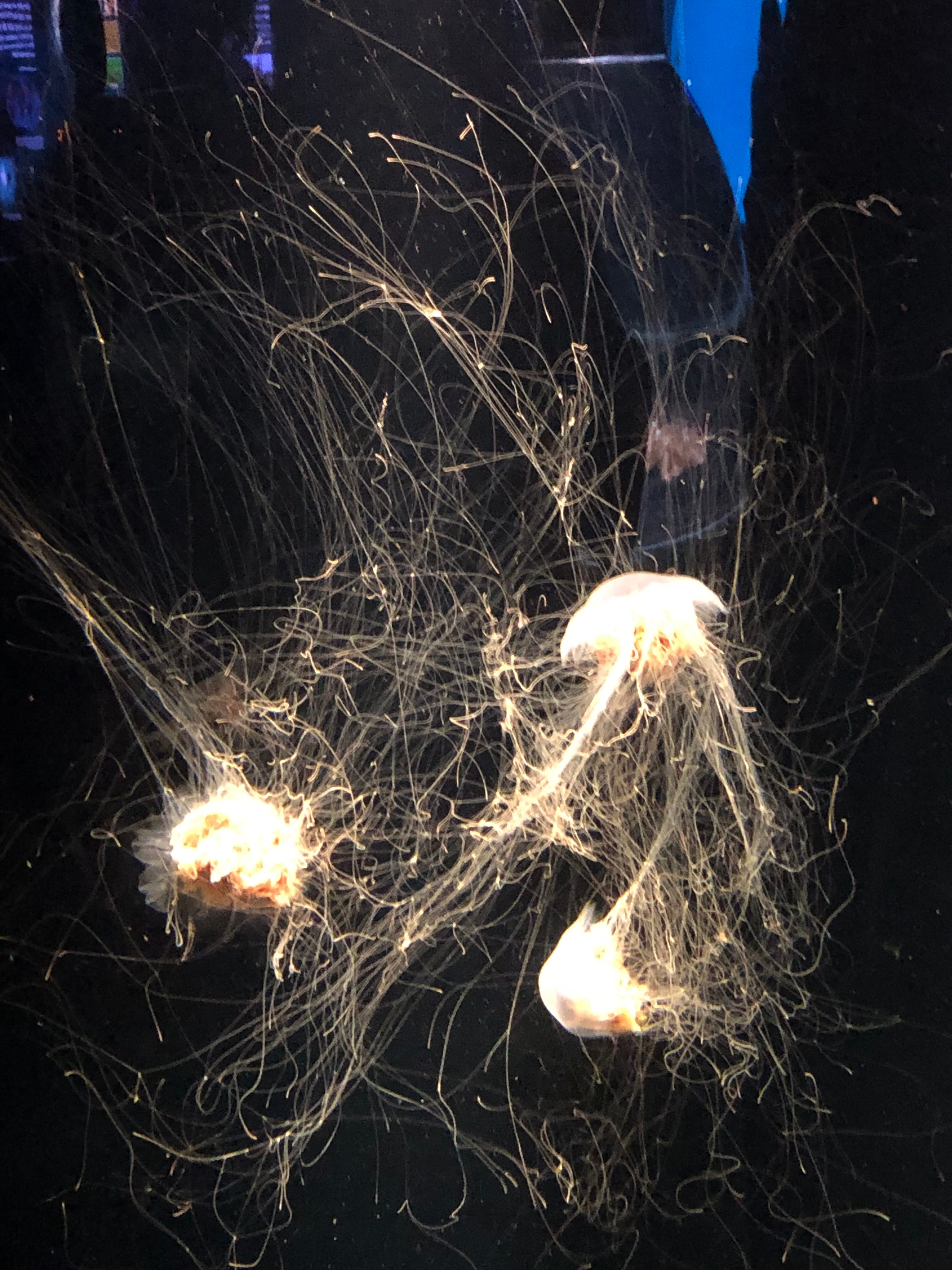
As a kid, I sat in my grandparents’ sunroom, waiting in gritting silence, waiting with my eyes dancing with light under pressure, waiting for the voice of the Divine to engulf my mind like Poseidon’s horses, to prove my time paying attention well-spent.
Twenty flies, spawned out of tepid air, stirred a hollow racket on the eight quadrilateral windows. I was warm. A lilting breeze rapped its knuckles on the glass. I was listening for a voice, for something to happen in this little box in my heart that harbors awareness outside of my thoughts. My Bible was closed. I was convicted.
I was listening.
And in some strange and beautiful fashion, here I am, sitting on the floor of my apartment, on a faux Arabian throw rug from Goodwill, banishing images and their ilk from my mind, inhaling through my nose and out my barely-parted lips, and I think about a Victoria Chang poem I read this week with the line:
“The terror of this year was emptiness.”1
I don’t know if I’ve wholly given up on the crystal voice from above, but I’ve become well-acquainted with abject silence. With the stillness of no expectation. My memories of youth harbor frustration. Along with this angst, as a child, I foretasted an intense desire to not just hear from, but be surrounded by something infinitely larger than my own thoughts. But there was shame. Hearing nothing, I assumed I was impatient. Or, when I felt something, maybe I had misheard.
I’ve been practicing apophatic prayer for about a year now, that prayer that premises emptiness and contemplation. When I have “calmed and quieted my soul,” I sit, waiting in the preeminence of what always has been.2 At first, like all new things, the prayer blazed like gilded bronze, the shining steeple of the ancient disciplines of the desert fathers and the burlap-girded saints, the stillness of Augustine’s “innermost citadel,” this basilica to the holiness of God’s silence.3 I think I missed the point.
Apophatic prayer, in the ancient sense, pursues God via-negativa, focusing on what’s unknowable rather than what is. God is not finite. God is not physical. God is ineffable. So, we rest in the corollary: God doesn’t need to say anything or do anything to prove Himself. Light itself instead of the image of the sun. The pursuit of God without icons.
Holding nothingness in your head is like a handful of sand, only full for a breath. In reality, it probably doesn’t exist. Pure nothingness, emptiness, and tranquility are a phantom, but the pursuit drives us to a truer state of being. We live in the in-between of life and death, thus pure experiences of joy or peace or nothingness, while not impossible, remain improbable. Naysayers might conflate ascetic practices with escapist desire, but true emptiness necessitates a grounded reality. Emptiness means staying in touch with human pain, even while the bird inside of us batters against our rib cage.
As Chang says: “When my mind is / empty, the feelings are gone. When the feelings are here, my tranquility / is gone.”4
Apophatic prayer has become a practice of sensing the pain of my body while silencing my ego. More than five minutes of sitting crisscrossed on the carpet or kneeling on the steel deck of my fire escape brings immediate awareness to the discomfort of my flesh. In the moments of breathing, I try to imagine the Spirit of God—the metaphysical incense of wholeness, of the world’s unity—flowing into that little box of awareness in my chest, and the desire to escape my body churning out of me like spoiled milk. I am sinews and neurons and muscle and acid and hair, and yet, as Augustine once described, my soul has seen the Godhead. Closing my eyes, I float in the silent stillness of my spirit and soul, but a press of my pointer finger against my eyelid, and I am dancing with dashing light and static, swimming through a legion of mottled grey boxes. I am more than—and yet nothing less than—a body.
I’ve added a weekly stretching routine to my Sabbath. I light a fat candle, bursting along its edge like the arrow flame just broke the skin. I pick a verse, mid-length, like a lyrical poem about a fish or a park bench or a steamboat, something I can work momentum into; today was Psalm 139.
Starting with my hands dangling toward the ceiling, suspended by desire, I inhale the verse and exhale my aversion to the verse. My aversion, simply, the chaos of distraction and exterior needs. My scapula hurts. An injury I incurred when I was dumb and twenty-two, when I thought I could bench-press more than my weight. Pain is part of the verse. Part of the words that go in as I repeat them, begging for them to linger longer and mean something to my body as it bends and warms and turns and pleats.
I pull my quadricep along its line, then I brush my fingers against the littered carpet and feel my posterior chain tight, stretching beyond my body. I’m breathing in the verse, expanding my sentience, tugging at the edges of this box of awareness in my chest: as the Psalmist pleaded, “expand my heart,” oh God.5
H. W. Auden once said:
Paradise is a state of harmony of understanding. We are always entering paradise but only for a moment, for in the instant of achieving a harmony we become aware that the whole which had previously seemed the limit of our consciousness is in its turn part of a larger whole and that there is new disharmony to be reconciled.6
Silence embodies many forms in the natural world. The pitch of the night under the weight of snow. The austere mossy boulder under the strip of sovereign trees in a cornfield. The rushing creek I frequent builds my hope in harmony.
From afar, the fresh patina winter runoff bounds over the copper lanes of river stone, blending under sunrays, reminding me of the perennially porous old and the new. I get close; this revelation disappears. The beauty becomes granular. The stream’s strict contour lines around the rocks mock my bones, proving me amorphous.
Along my winter Sabbath walk, passing eight-foot runs of split-rail fence that border the creeping creek overshadowed by forest, I noticed graffiti fresh to my eyes. Pencil-engraven in the lichen rail-wood, overlaid with weak spray paint.
“One day U will have it All”
My head cocked to one side, rain flitting on the ice chunks in the creek, I attended to the simplistic horseshoe “U”. It sat there, as it was, mocking, lazy, asking, like an empty cup. If we’re to believe that something completes this circuit of harmony and disharmony, then I guess All will do.
In the summer, my legs dangle in the gentle rush of the water, I close my eyes to breathe and forget the people and the penitence and the plague of this self-conscious mask I don every morning. I rest in the silence of the creek’s constant fall. Sometimes I think of nothing. Sometimes I sense that something wants me to remember in kind, to ascend through memory into a harmony with creation. Images of dinner tables shadowed in guttered candles, laughter in the spring grass, swing-dancing double rainbows over a tantamount couple, dewed in nothing but bliss. When I finally see again, the trees tower beyond me, unreachable as the dust motes floating in the squares of light of my kitchen window.
This is the tension of seeking emptiness in itself. A tension of desires. Sitting in a hunger never to be slaked. Allowing the hollowness to shape us. Emptiness has to do with proximity, the distance between ourselves and the object of our desire. A taut line between bodies of text, between cascading lines, between the vertical and horizontal orientations. In absence, we are invited to follow, to delineate, the lines of desire, the fault line between our bodies and the stars.
When we desire, we extend ourselves toward something. In a way, we extend our wholeness, our essence, our sentience. Attention, while often posed as a commodity we can buy or sell, actually moves in and through us and without us, something we harness or participate in, something we can empty ourselves of and draw back in. Falling in and out of harmony with it All.
As I pray, I sink into silence, into the black, into my body, my soul aloft. Then, when I sense I am ready, I move to an object. I imagine the cross that saved me. Not a cross of language and whitespace, a cross that held language aloft, the Word incarnate, the voice of God above all. Red rivulets trace knots in the woodgrain. He cries out to the silent sky, “poured out” for us, emptied of his words.7 I am kneeling at his feet in the sand of Gethsemane, horrified at the holes in his skin, enraptured by his stigmata, this absence that reaches me as I am kneeling in my apartment with this faux Arabian rug. I do not give my attention to Him. I could never give him anything. Creation has never looked away.
The window at my desk opens to the woods behind my apartment. The venetian blinds parcel out the woods into symmetrical rectangles, four across in a long horizontal, like a line of poetry split with slants. I can look through the box here, find tangent smudges of birch trunks, and ask, what if this was all that there was? What if I negate the rest of the window? Would there be enough to wonder in? Would it prove my time paying attention well-spent?
I (oft pitiably) attempt to schedule pauses from my work to close my eyes and breathe in and out the Jesus Prayer. Practicing fidelity to this ancient moment of articulation, passed down for centuries, I find a window of beauty out of emptiness. The square in my chest brims:
Inhale Exhale Inhale Exhale
Lord Jesus Christ / the Son of God / Have mercy on me / A sinner.
Chang, Victoria. With My Back to the World. “With My Back to the World”, pp. 3
Psalm 131:2 ESV
Confessions. Vii. x. 16.
“Mountain, 1960,” pp. 10
Psalm 119:32 ESV
Auden, H.W. The Prolific and the Devourer. The Ecco Press, 1976. Pp. 38.
Philippians 2:6-11 ESV